- Home
- The town
- The municipality and its history
Torrelles de Foix
A town in the Alt Penedès, 368 metres above sea level, where much of the River Foix rises. About 2,500 people live in the town centre, the residential estates and the outlying neighbourhoods.
The area
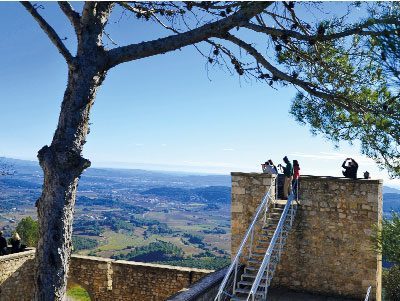
Torrelles de Foix is in the eastern, inland part of the Alt Penedès county (comarca). At about 368 m above sea level, the municipality borders la Llacuna, Font-rubí and the Anoia county to the north; the neighbouring town of Sant Martí Sarroca to the east; the Baix Penedès county, at el Montmell, to the south; and to the west, the municipality of Pontons separates us from the Alt Camp county.
Much of the upper River Foix runs through the municipality, as does its tributary, the riera de Pontons stream.
The municipality covers about 37 km² and has 2,503 inhabitants today. The largest settlement is the town of Torrelles itself. Can Coral and Plana de les Torres are the largest residential estates, followed by les Espolles and la Montsarra. There are also several small neighbourhoods: el Cusconar, Can Via, Mas Bertran, la Verna, Puigvell, les Llambardes, Corral Nou, el Pany and Can Cruset, which lies on the boundary between Sant Martí Sarroca and Torrelles de Foix.
History in five lines
People have lived at la Verna since the 2nd century BC: first there was an Iberian iron furnace, then a Roman villa with baths and a wine cellar. Foix castle is first mentioned in writing in 984, as the boundary of another castle; the village, “Sant Genís de Torrezeles”, in 1185. The hilltop church was consecrated in 1330, and in 1388 the Crown sold the castle, the town and its lands to Bernat de Pinós.
In the 16th century the Peguera family arrived and were lords of the area for three centuries, until Maria Manuela de Peguera died in 1881 and the family line ended. On 22 July 1936 the church, the parish church of Foix and the hermitage were burned, and the archive with them. In 1978 a group of local residents began restoring the sanctuary and the Amics de Foix association was founded; the Diputació (provincial council) completed the work in 1988.
Information from the historical archive of Amics de Foix (Arxiu Històric), which cites the source for each event.