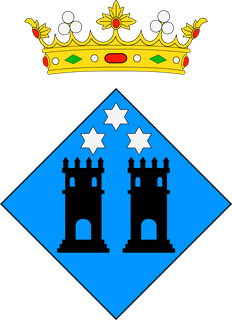
A short history
Eight moments to help you understand where we come from. They are a selection from the Amics de Foix Historical Archive, which holds many more, each with its source.
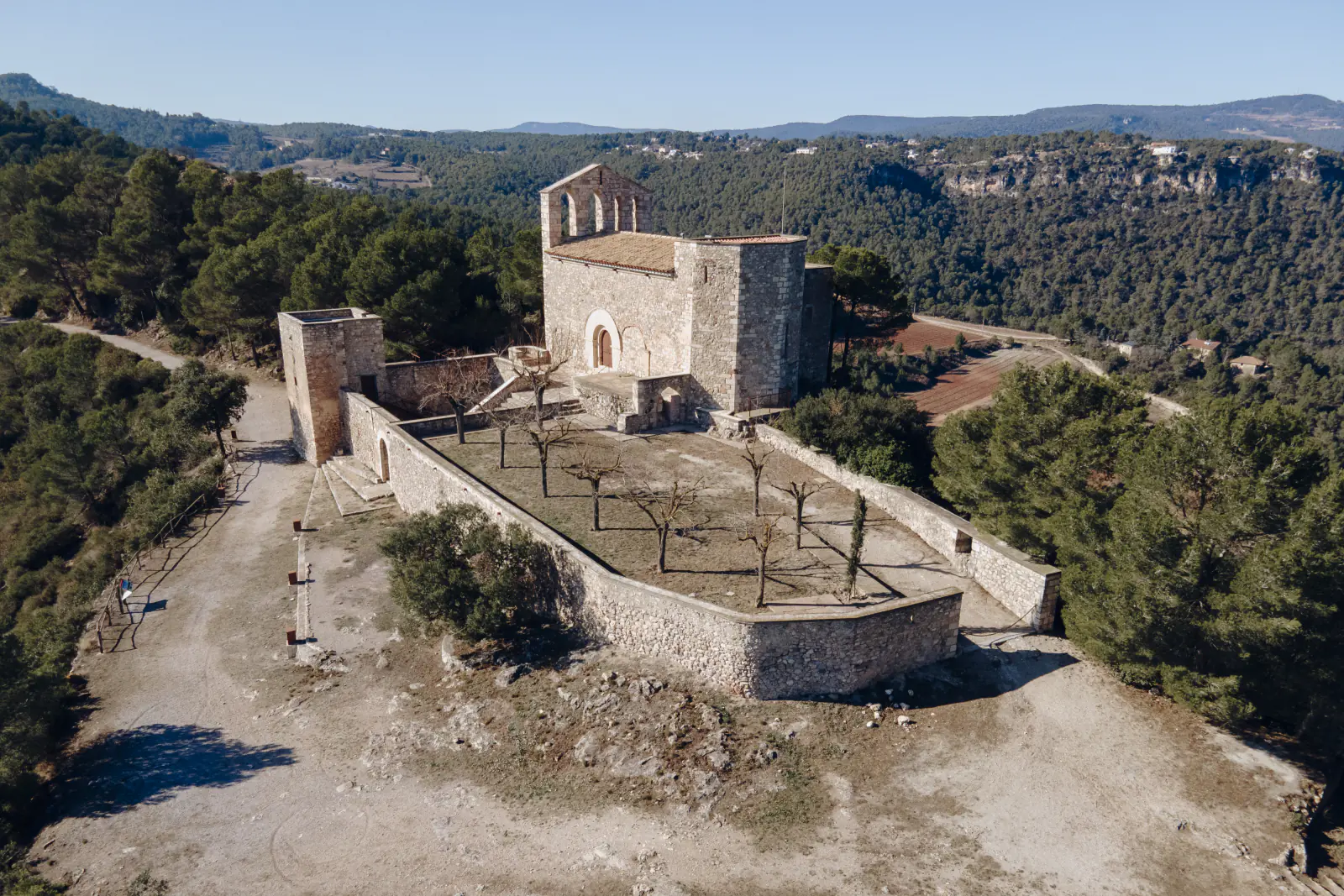
The hill of Foix, where the castle that gives the town its name once stood. Photograph from the Amics de Foix Archive.
- 2nd century BC
La Verna, before the castle
The earliest trace of people in the area is an Iberian iron furnace at la Verna. Later, the Romans built a villa there with baths and a wine cellar.
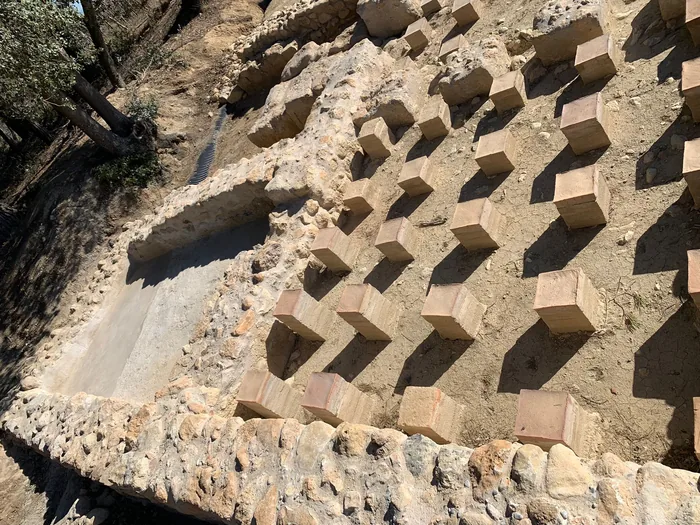
The baths of the Roman villa. Arxiu d'Amics de Foix Source: ArqueoVitis ↗
- 984
Foix appears in writing for the first time
A document about another castle says that, to the west, lie the lands of Foix Castle. It is the oldest known mention of the area.
- 1185
The name Torrelles is born
The first mention of the village, as “Sant Genís de Torrezeles”. It is also the first record of the parish.
Source: Gran Enciclopèdia Catalana ↗
- 1330
Santa Maria de Foix is consecrated
On 21 December the church on the hill was consecrated. Santa Maria de Foix is now the patron saint of the Penedès.
Source: Catalunya Romànica ↗
- 1388
The king sells the town
King John I and Queen Violant sold the castle, the town and its lands to Bernat de Pinós. The town was no longer ruled by the king but by a local lord.
Source: Addició al discurs en dret de la vila de Torrelles, 1699 ↗
- 15th c.–1881
Three centuries of the Peguera family
The Peguera family arrived through marriage and were lords of the area for more than three hundred years. In 1881 Maria Manuela de Peguera died unmarried, and the family line came to an end.
Source: Gran Enciclopèdia Catalana ↗
- 1936–1937
The war
On 22 July 1936 the churches and the hermitage were set on fire, and the parish registers burned with them. The following year the Town Council printed its own banknotes, with the Les Dous fountains on the back.
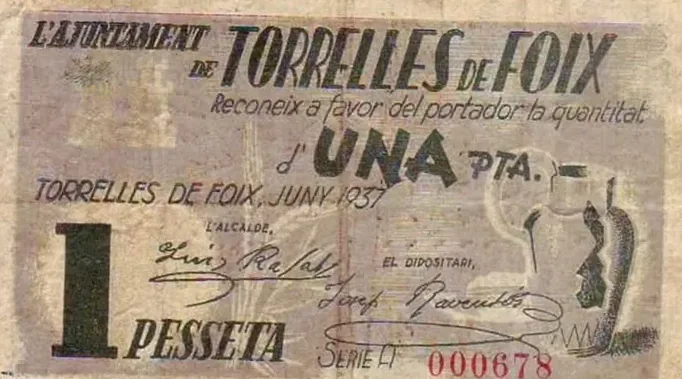
One-peseta note from 1937. Arxiu d'Amics de Foix - 1978–1988
Local people save the sanctuary
A group of local residents began restoring the half-abandoned sanctuary, and Amics de Foix was founded. Barcelona Provincial Council finished the work in 1988.
Source: Arxiu d'Amics de Foix